
Kubota, Yanmar, or Chinese—Does Engine Brand Matter on a Mini Excavator?
A lot of buyers focus on lifting capacity first. That makes sense. But if your forklift spends part of the day going in and out of shipping containers, mast type matters almost as much as rated load.
The problem is overhead clearance. Standard containers do not give you much room to work. A forklift with the wrong mast can force the operator to stop outside the container, re-angle the load, and waste time on every truck. Over a month, that becomes a real labor cost.
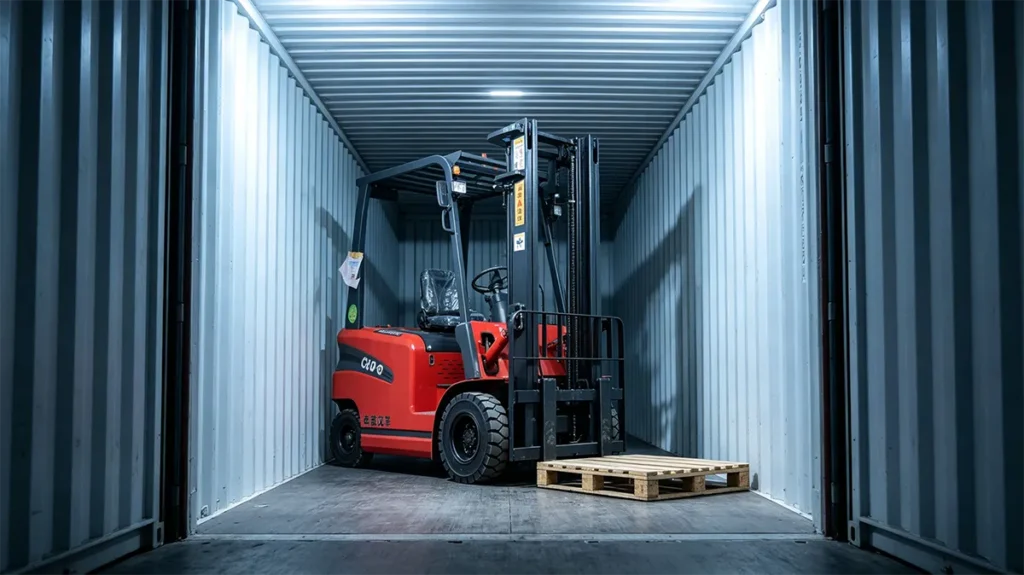
For container work, buyers should pay attention to collapsed mast height and free lift. Free lift is how high the forks can rise before the inner mast starts extending upward. In container loading, that matters because the roof is the hard limit. A machine with good free lift lets you adjust pallet height inside the container without hitting the top frame.
For lighter warehouse-container operations, the CPD-15 1.5 ton electric forklift is usually enough. If you are loading heavier export pallets or machinery crates, the CPD-20 2 ton model gives more margin without becoming too bulky.
One practical rule: if container loading is daily work, ask your supplier for the mast drawing, not just the brochure. The drawing tells you the closed height, lift height, and free lift in real numbers. That is what actually prevents expensive mistakes.
If you want help matching mast spec to your container workflow, start here: sdslmachinery.com/contact-us/