
Loading Dock Ramps: Critical Factors Electric Forklift Buyers Miss
A forklift that feels stable on a flat warehouse floor can feel very different on a dock ramp. That is where many buyers realize too late that they bought by headline specs instead of actual operating conditions.
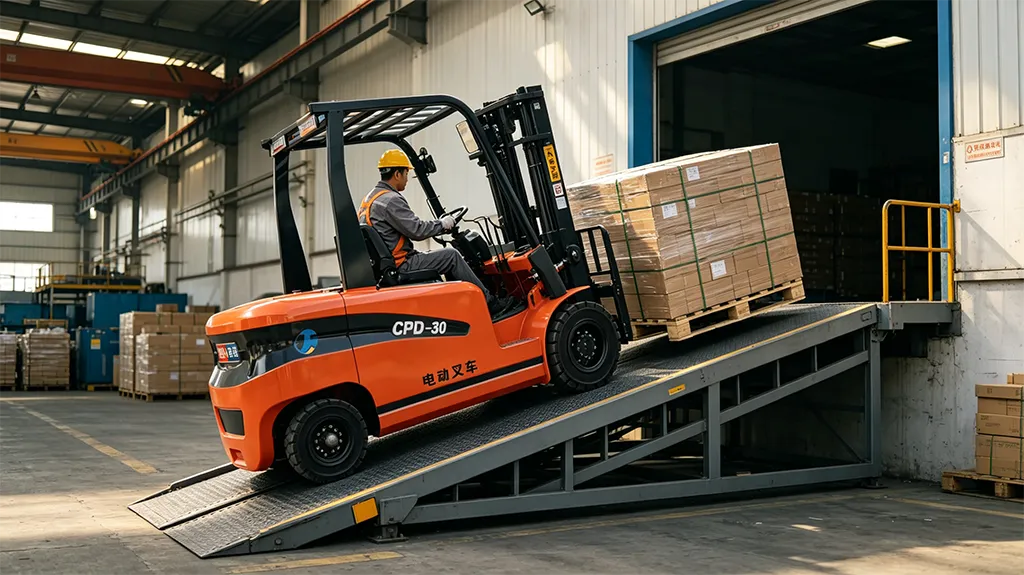
The first issue is gradeability. Every forklift has a practical climbing limit, but operators rarely work with an empty machine. They are driving up a ramp with a pallet, then braking, turning, and backing down. That changes the equation. If your dock has a steep incline and your loads are dense, you need enough traction and enough torque reserve.
The second issue is load center shift. On a ramp, the effective weight distribution changes. A pallet that feels stable on level ground can feel heavier on the front axle when climbing. That is one reason heavier counterbalance models like the CPD-25 or CPD-30 are common in dock-intensive operations.
Tires matter too. Solid tires are durable, but on wet ramps you still need clean surfaces and disciplined driving. A forklift is not a skid-steer. If your dock is exposed to rain, surface condition becomes part of the equipment decision.
Before buying, measure three things: ramp angle, pallet weight, and daily truck volume. Those three numbers will tell you whether a standard warehouse forklift is enough or whether you need a heavier model with more stability reserve.
See the full lineup here: sdslmachinery.com/product/