
Narrow Aisle Forklifts: How to Choose the Right Electric Model
Some warehouses were designed when pallets were stacked three-high and aisles were generously wide. Those days are gone. Modern racking systems push storage density to the limit, and that leaves operators threading a 2.5-ton machine through gaps that barely have clearance on each side.
Getting this wrong isn’t just an efficiency problem. It’s a damage problem.
The turning radius question comes first. Counterbalance electric forklifts—the type in our CPD lineup—use a rear-wheel steering system. The turning circle is larger than a reach truck’s. That’s not a flaw; it’s a design trade-off for outdoor stability and ramp capability. But it means you need to verify your aisle width matches the machine’s actual 90° turning radius, not just the stated width.
The CPD-15 has a 90° pivot turning radius that works well in aisles from around 3.5m wide. The CPD-20 sits slightly larger. Measure your tightest turn before you order.
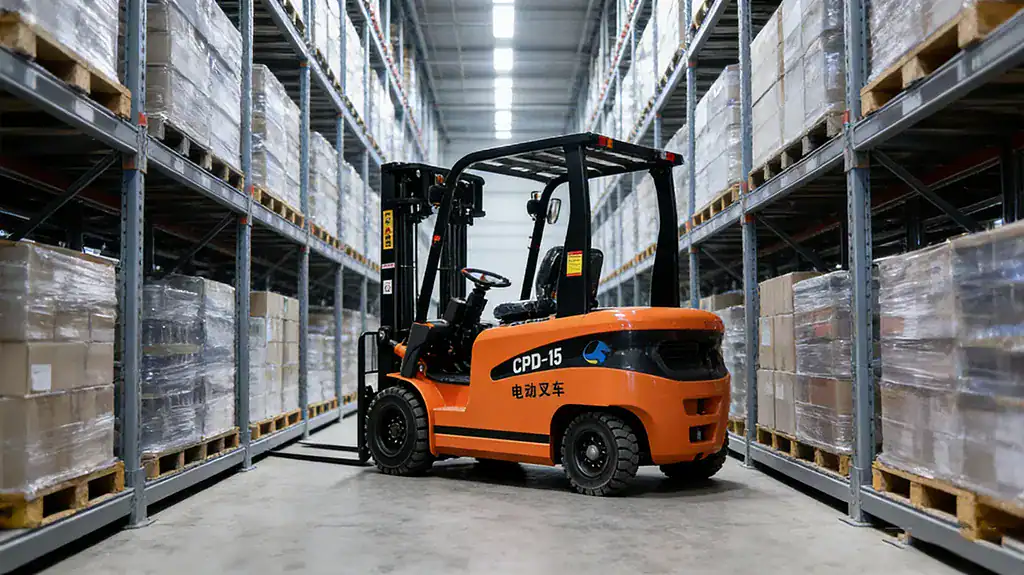
Mast height matters more than people realize. If your racking tops out at 4.5m, you need to know the forklift’s free lift height—how high the forks travel before the mast extends. A low free lift matters most in containers and low-clearance areas. Our standard mast offers 3m lift height, with customization available up to 4m. That covers most standard warehouse racking configurations.
Solid tires vs. cushion tires. For indoor warehouses with smooth concrete floors, cushion (pressed-on) tires give tighter turning geometry than solid pneumatics. All CPD models ship with solid rubber tires standard—puncture-proof, no pressure checks, consistent surface contact. If your floor is rough or you operate outdoors, that’s exactly what you want.
One last thing: operator visibility. Smaller forklifts give better sightlines. If your team is navigating tight racking daily, that matters more than raw lifting capacity.
Contact us to discuss the right configuration for your facility: sdslmachinery.com/contact-us/