
Electric vs Gas Mowers: Comparing Professional Remote Control Models
The mowing industry is having the same conversation the forklift industry had five years ago. Electric is coming. The question for buyers isn’t whether to go electric eventually—it’s whether the timing is right now.
Where electric mowers are genuinely ready: The SN-550IEC is a purpose-built electric remote control mower, not a gas machine with a battery swap. It covers managed grass applications, low-to-moderate slopes, and environments where noise and emissions are primary concerns.
Think: urban parks where noise ordinances apply, hospital grounds, school campuses, golf course rough areas near residential property. The silent operation and zero exhaust aren’t just environmental points—they’re practical advantages that win contracts in those settings.
Where gas still leads: High-hour commercial brush clearing applications. An 8-hour day of dense vegetation work requires energy storage that current electric drive systems don’t match on a single charge. The SN-550J gas mower and SN-1000B run all day because gasoline has ~50 times the energy density of current lithium cells by weight. That physics gap doesn’t close in the near term.
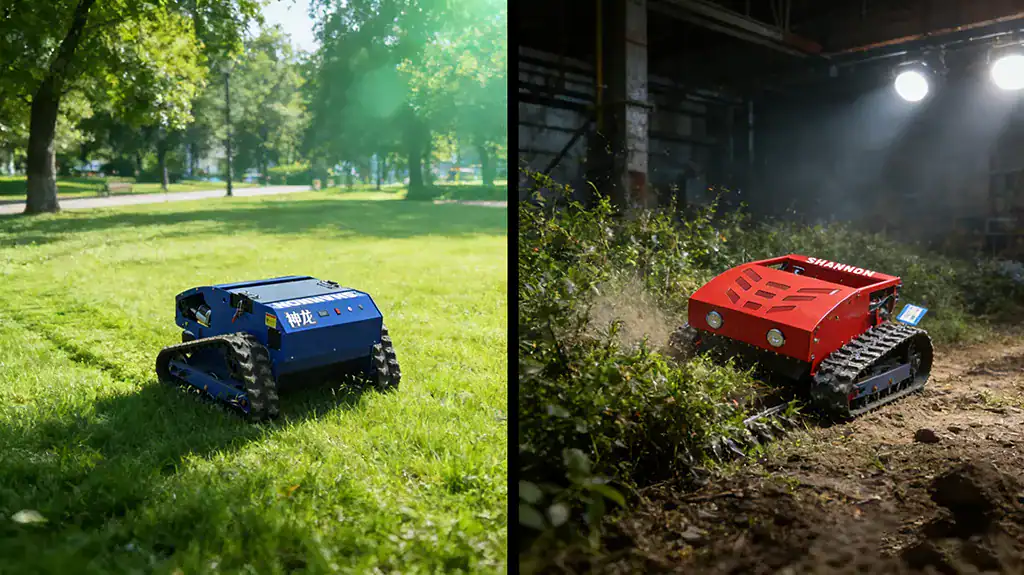
The noise factor is underrated. Gas remote control mowers run at 90–100dB at the machine. Operators using hearing protection is standard practice. Electric units run at 65–75dB. Over the course of a 5-day work week, that difference matters for operator health. It also matters for community relations on job sites near homes and businesses.
Total cost comparison over 3 years (moderate use, single shift):
- Electric: Higher upfront, near-zero fuel cost, minimal maintenance
- Gas: Lower upfront, ongoing fuel and maintenance cost
At moderate utilization (4 hours/day, 200 days/year), gas fuel alone runs $2,000–3,500 per machine per year depending on your market. Electric running cost is roughly $300–600 in electricity. That’s a meaningful gap over 3 years.
For buyers in markets with strong ESG reporting requirements or carbon accounting frameworks, zero-emission equipment also has indirect value in client reporting and tender scoring.