
Forklift Capacity Guide: How to Choose Between 1.5, 2, and 3 Ton Models
“Just get the bigger one” is advice you’ll hear a lot. It’s not always wrong, but it’s not always right either. Oversizing a forklift has real consequences that don’t show up in the spec sheet.
Start with your actual load weights. Not your heaviest theoretical load—your typical daily cycle. If 80% of your lifts are 800kg pallets and 20% hit 1,400kg, a 1.5-ton machine handles your operation. Running a 3-ton machine on 800kg loads means you’re burning energy to move machine weight that isn’t doing productive work.
The 1.5-ton class (CPD-15) is built for standard warehouse pallets, retail distribution, and light manufacturing. Aisle-friendly dimensions, lower purchase cost, lower energy draw per shift. If your heaviest regular load is under 1,200kg and you’re working indoors on flat surfaces, this is worth serious consideration. See full specs →
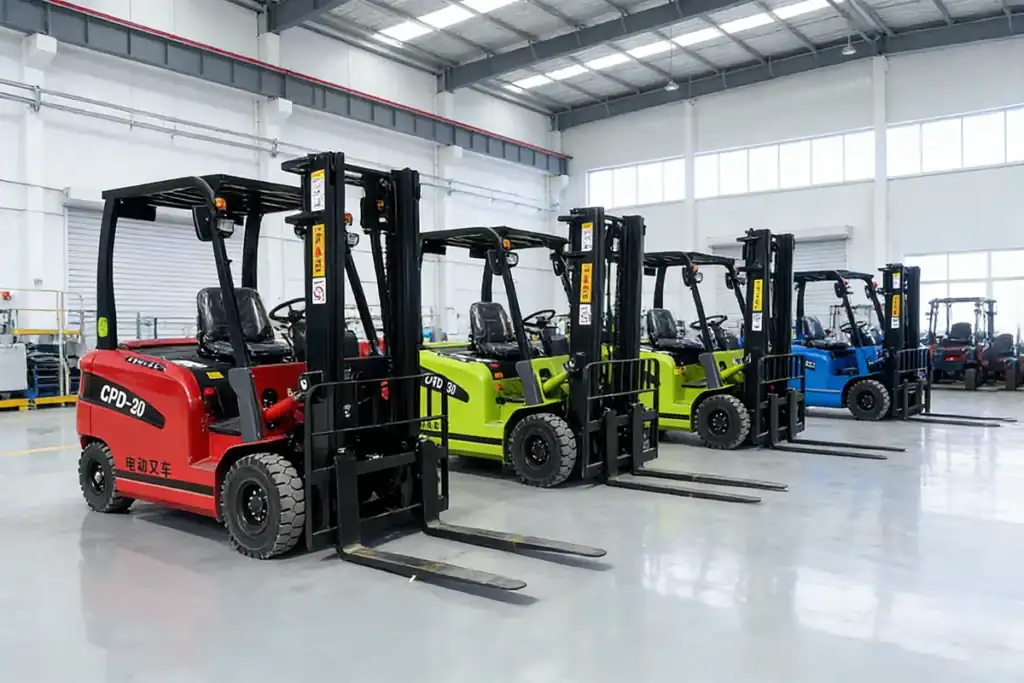
The 2-ton class (CPD-20) is the volume seller for a reason. It covers the widest range of applications—from loaded pallets to machinery moves—without jumping to a larger machine footprint. Lithium battery option makes it a strong choice for operations running more than one shift. See full specs →
The 2.5-ton class (CPD-25) adds meaningful capacity for operations handling heavier reels, machinery components, or stacked loads. Footprint grows slightly but not dramatically. A good middle option for buyers who regularly touch the upper range of 2-ton ratings. See full specs →
The 3-ton class (CPD-30) and 3.5-ton (CPD-35) are for operations that genuinely need that capacity—steel distribution, heavy manufacturing, container unloading. If you’re not regularly lifting above 2,000kg, you’re paying for machine and energy you don’t use. CPD-30 specs → | CPD-35 specs →
One practical note: forklift rated capacity is measured at a standard load center (usually 500mm). Loads with an extended or offset center of gravity reduce effective capacity. Factor this in before locking in a spec.