
Gear Pump or Piston Pump? What Mini Excavator Buyers Must Know
Most guys shop by horsepower and bucket size. Almost nobody asks what kind of hydraulic pump is inside. But that pump decides whether engine power actually reaches the bucket teeth.
Here’s the difference.
Gear pumps are simple and tough. Two gears mesh, shove oil through at a steady rate. Proven design, few moving parts. The catch: they keep pumping full flow even when nothing’s moving. Holding the boom mid-air? Still pumping. Oil dumps through relief valves, turns into heat. On a long summer day, efficiency drops.
Piston pumps vary flow on demand. A swashplate changes displacement on the fly. Stop moving, flow drops to near zero. Feather boom and bucket together, it splits flow smoothly. Operators notice this fast—less jerky, easier to finesse.
A landscaper doing final grade feels it in ten minutes. No stutter when curling the bucket while lifting. Less rework, less fatigue.
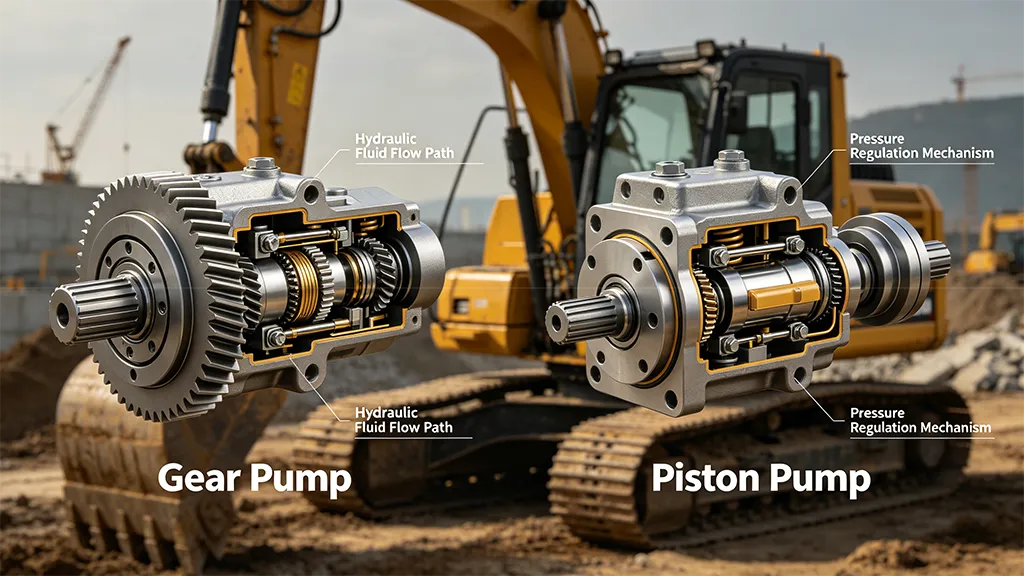
Load-sensing goes further. The system reads pressure at each cylinder, tells the pump exactly what to deliver. Two functions together don’t fight. Our SN-18 series and SN-KT22 use this setup. The SN-17-2 runs standard piston pump load-sensing for trenching and site prep.
Does everyone need it? No. 200 hours a year on a farm? Dual gear pump is fine. Daily revenue work? Piston pump earns its place in fuel and control.
Reading a spec sheet: “Dual gear pump”—fixed displacement, light duty. “Piston pump load sensing” or “plunger pump”—variable displacement, built for pros.
Also check under the boom. Top-mounted cylinders and internal hose routing keep plumbing safe from debris. The SN-TC15 is designed this way.
Horsepower looks good in a brochure. The pump decides what you actually use.
Not sure which setup fits your work? Tell us your typical conditions. We’ll point you to the right machine.
WhatsApp: +86 138 0537 3583 | Email: [email protected] See full mini excavator range →